Is Your IT Saving Your Dental Practice Money—or Quietly Costing You?
Your IT bill is easy to measure. The cost of unreliable technology is harder to see.
It shows up when your front desk spends 20 minutes troubleshooting instead of following up on unscheduled treatment. When an imaging issue backs up the afternoon. When a computer fails unexpectedly and forces an emergency purchase.
These expenses rarely appear under “IT” on your financial reports. They show up as lost time, interrupted production, and extra work for an already busy team. Real dental IT cost savings start with reducing these everyday inefficiencies and preventing avoidable expenses.
The right dental IT partner can help control those costs while protecting the systems your practice depends on every day. Here’s how.
Protecting the Schedule Protects Revenue
A full schedule depends on more than having patients in the chairs. Your team needs reliable access to patient records, imaging, treatment plans, phones, and payment systems.
When one of those connections breaks down, the impact can spread quickly. Patients wait. Staff fall behind. Appointments may need to be moved, and your team has to find time to recover.
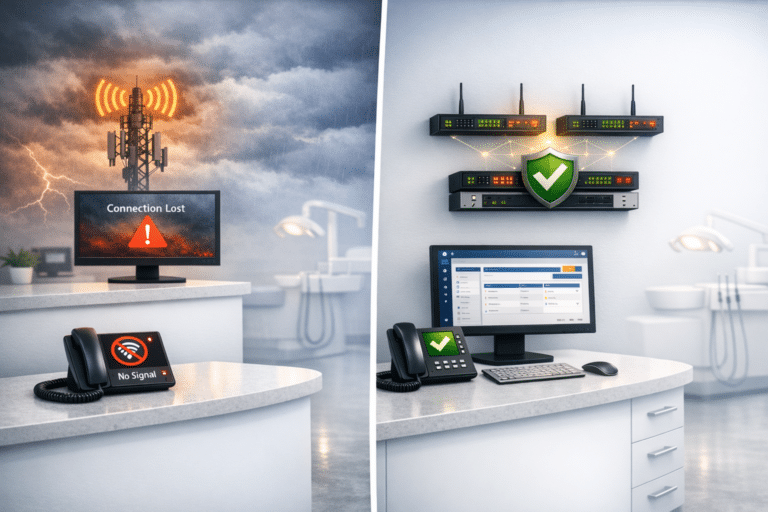
Proactive IT management helps reduce avoidable disruptions through regular maintenance, monitoring, updates, and planning. When problems do happen, having a team that understands dental workflows can help focus troubleshooting on what matters most: getting your practice working again.
No provider can prevent every interruption. But there is a meaningful financial difference between managing technology consistently and waiting until something stops working.
Small Delays Add Up to Real Labor Costs
Not every expensive technology problem brings the office to a halt.
Sometimes it’s the workstation that freezes several times a day. The slow login everyone has learned to tolerate. The connection issue that requires the same workaround every morning.
Consider a simple example: if six employees each lose 10 minutes per workday to technology problems, that adds up to one staff hour daily—or approximately 20 hours over a 20-day work month.
That is an illustration, not a promise of savings. But it raises a useful question: how much staff time is your practice spending working around technology?
Addressing recurring problems can give your team more time for patient communication, insurance follow-up, scheduling, and other work that keeps the practice moving.
Some of the most valuable dental IT cost savings come from giving your team back time to focus on patients instead of technology problems.
Planning Technology Purchases Creates Dental IT Cost Savings
Getting the most from your equipment does not always mean keeping it until it fails.
A computer may still turn on while struggling with the software your team needs. An aging network device may become a bottleneck. Replacing equipment only after a failure can leave you making rushed decisions while the office waits.
A dental IT partner can help you evaluate performance, compatibility, support status, and replacement priorities. That allows you to spread investments over time and budget with better information.
It also helps you avoid buying more than you need. The goal is technology that fits your practice, with a clear reason behind each recommendation.
Cybersecurity Supports Business Continuity
Protecting patient information and keeping the office operational go hand in hand.
A compromised email account or ransomware incident can create disruption, recovery work, and costs that extend well beyond repairing a computer. The American Dental Association recommends preventive measures such as security updates, employee training, and an emergency response plan.
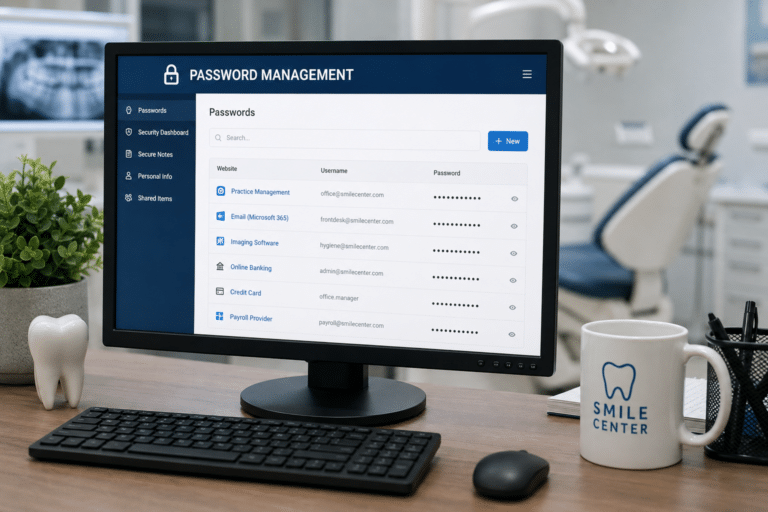
A thoughtful IT strategy addresses multiple areas: account access, email security, monitoring, updates, and backup recovery. The ADA also emphasizes regular backups with a secure off-site copy as part of ransomware preparedness.
Practices should also understand what their backups cover and whether recovery has been tested. Knowing that a backup completed is different from knowing how the office would resume work.
These are practical business decisions. They help reduce preventable exposure and prepare your team to respond when something goes wrong.
Your Office Manager’s Time Has Value, Too
In many practices, the office manager becomes the unofficial IT coordinator.
They call the software company, contact the internet provider, explain the issue again, and try to keep the schedule moving while different vendors investigate.
That work pulls them away from managing the practice.
A dental IT partner can help coordinate troubleshooting across vendors and give your team a clear place to start. Familiarity with dental software, imaging systems, and clinical workflows provides useful context when identifying where an issue originates.
For the owner, that can mean fewer interruptions. For the office manager, it can mean more time to lead the team.
Why Dental IT Expertise Matters More Now
Technology reaches into nearly every part of the patient journey: the first phone call, online forms, imaging, treatment presentation, billing, and follow-up.
Each connection creates something to manage. A new application may need secure access. New imaging equipment may have specific workstation requirements. A move or expansion may require changes to internet service, cabling, phones, and Wi-Fi.
Even a practice using cloud-based practice management software still depends on reliable internet, secure computers, protected accounts, and a well-managed network.
As practices connect more of their operations, technology decisions become business decisions.
A partner who understands dentistry can help evaluate those decisions in the context of your actual workflow. What will help the team? What needs to be addressed first? What should be budgeted for next year?
That guidance matters whether you are running one office, opening a new location, or supporting a growing group.
Look Beyond the Monthly IT Bill
When evaluating IT support, consider the total cost to your practice.
How often does your team lose time to recurring issues? Who coordinates support when vendors overlap? Are equipment replacements planned? Do you understand how your practice would recover from an interruption?
Meaningful dental IT cost savings come from looking beyond the monthly bill to the downtime, staff hours, and unexpected purchases your IT support helps you avoid.
At Digital Technology Partners, we bring more than 20 years of dental IT experience to practices across Georgia, North Carolina, South Carolina, Alabama, and Tennessee. We understand how closely technology is tied to your schedule, your team’s productivity, and your ability to care for patients.
Our goal is to help you make informed technology decisions, reduce avoidable disruption, and plan confidently for what comes next.
Want to understand where your technology could be costing your practice time and money? Schedule a free evaluation at www.dtpartners.com.