
From First Ring to First Visit: Why Telephony Is Critical to Practice Success
In today’s technology‑driven dental environment, telephony has become one of the most influential components of the patient experience and daily operations. Before a patient ever meets your team or steps foot in your office, their journey begins with a phone call. The reliability, clarity, and efficiency of your phone system can determine whether that first interaction builds confidence—or sends patients elsewhere.
Here are three essential reasons why modern telephony is critical to dental practice success:
1. Telephony Shapes the Patient Experience From the First Ring
Your phones are the true front door to your practice. Every interaction—whether scheduling, handling emergencies, answering insurance questions, or supporting new‑patient inquiries—creates an impression that impacts trust and conversion.
A high‑quality phone system ensures:
- Clear, reliable call quality
- Intelligent routing that gets patients to the right person quickly
- Customizable auto‑attendants that guide patients smoothly
- Call queues that reduce frustration during peak times
- Text messaging options for patients who prefer SMS
When calls are dropped, go unanswered, or take too long to route, patients easily become frustrated and turn to another provider. Modern systems eliminate guesswork by providing data on abandoned calls, hold times, peak call volume, and team responsiveness—giving you the insights needed to improve patient communication and capture more opportunities.
2. Telephony Improves Team Efficiency and Reduces Front‑Desk Stress
Your front desk manages a constant flow of tasks: check‑ins, insurance verification, scheduling, payments, and patient support. Without a reliable phone system, the workload quickly becomes overwhelming.
Advanced telephony tools support your team by offering:
- Voicemail‑to‑email for faster follow‑up
- Mobile and remote call handling
- Shared call visibility across operatories or locations
- Overflow routing for busy moments or lunch hours
For multi‑location practices, a centralized telephony system ensures consistent messaging, better load‑balancing, and a unified patient experience no matter which office a patient calls.
The result? A more efficient team, fewer bottlenecks, and smoother operations across the practice.
3. Telephony Strengthens Security, Reliability, and Business Continuity
Dental practices handle sensitive patient data every day, making secure and compliant telephony a necessity—not a luxury. When telephony is part of a broader managed IT strategy, your systems benefit from:
- Encrypted communication
- HIPAA‑aligned configuration
- Proactive monitoring
- Cloud‑based redundancy and failover
- Automatic rerouting during outages
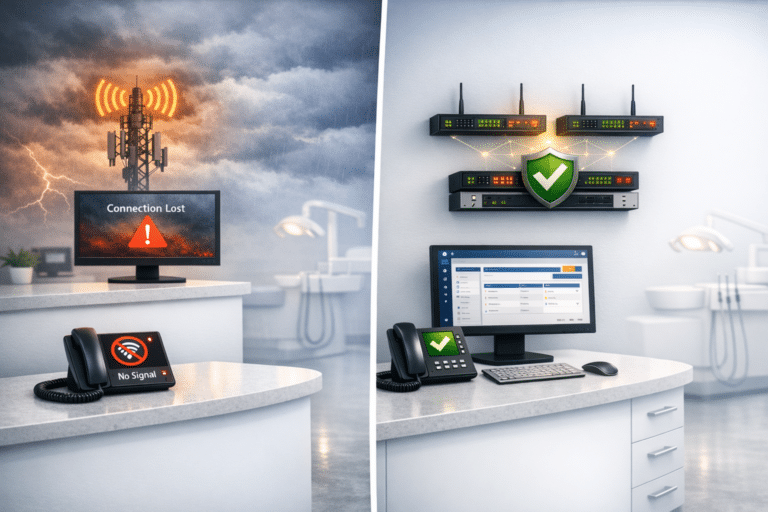
Cloud telephony ensures your practice remains reachable even during unexpected disruptions like power outages, internet issues, or hardware failures. Instead of downtime and lost production, calls continue to flow and patient needs are met without interruption.
When your phone system is aligned with your IT environment and supported by a dental‑focused MSP, it becomes a strategic advantage—improving patient experience, strengthening security, and supporting long‑term growth.
Ready to Strengthen Your Practice’s Communication?
Book a Discovery Call today to learn how modern telephony can elevate patient experience, improve team efficiency, and protect your practice from unexpected disruptions.