The #1 Threat to Your Dental Practice’s Security Isn’t Hackers — It’s the Person Using the Mouse
When most dental practices think about cybersecurity, they imagine external threats—hackers, ransomware gangs, or shadowy figures trying to break into their systems. While those dangers are very real, the truth is far less dramatic and far more unsettling: the biggest threat to your dental practice’s security is often the person using the mouse. In fact, according to Cybercrime Magazine, cybercrime has become the world’s third‑largest economy, with costs projected to reach $12.2 trillion annually by 2031.
Dental Practices Are Prime Cybersecurity Targets
Dental practices are attractive targets for cybercriminals because they store high‑value data with relatively limited security oversight. Patient charts contain:
- Protected Health Information (PHI)
- Personally Identifiable Information (PII)
- Insurance and billing data
- Digital X‑rays and imaging files
Add cloud systems, remote access, practice management software, and connected devices, and you have a complex digital environment that must be protected. Unfortunately, many practices assume that installing antivirus software or having “an IT guy” automatically makes them secure. In reality, most dental cybersecurity incidents start with a single click.
Why the Mouse Represents the Biggest Risk
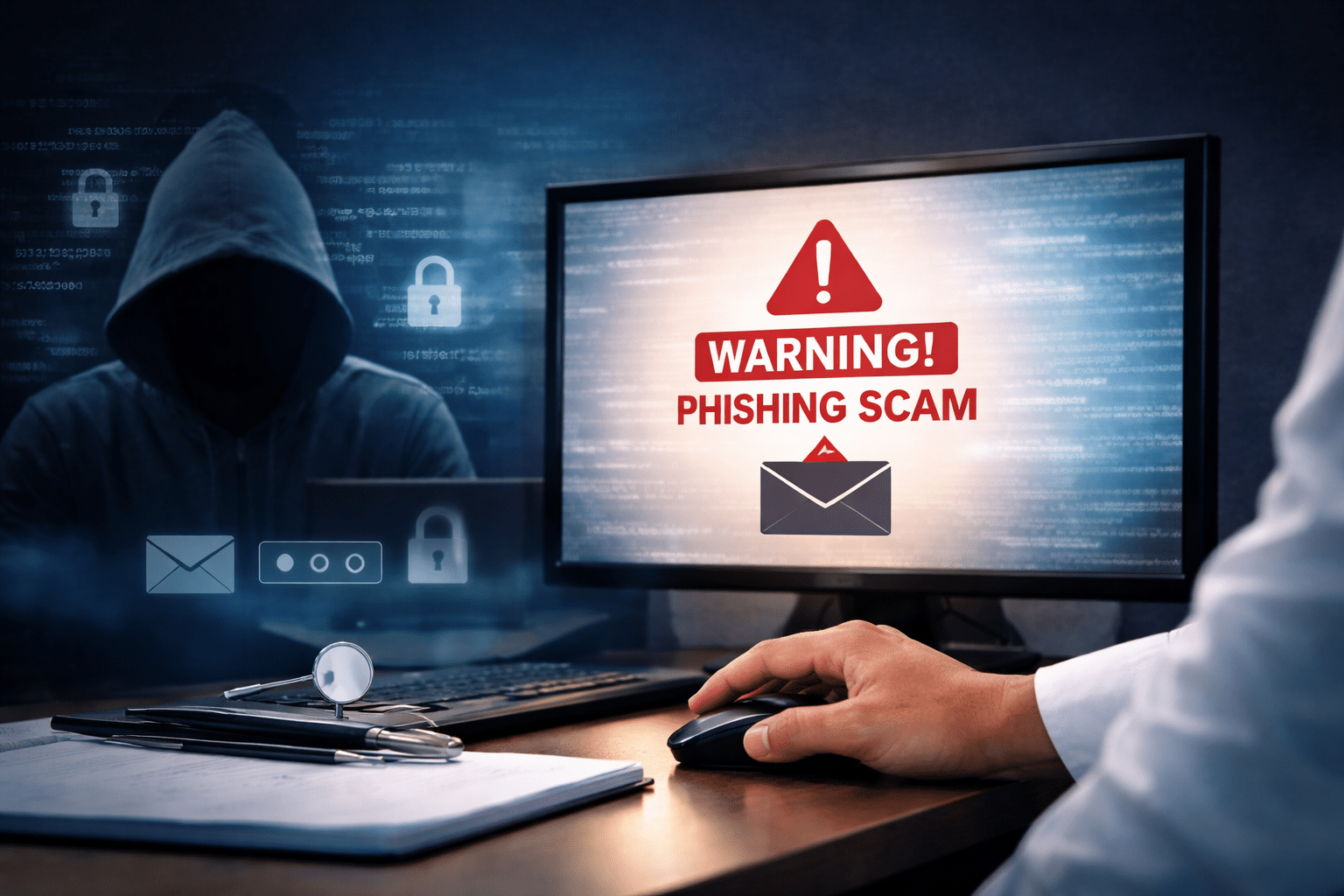
Every click is a decision. Opening an email attachment. Downloading a file. Resetting a password. Approving a pop‑up. Cybercriminals design attacks specifically to exploit trust, urgency, and routine — not technical flaws.
Phishing emails today are incredibly convincing. They often appear to come from:
- Dental suppliers
- Insurance carriers
- Labs or software vendors
- Internal staff members
All it takes is one busy team member clicking without verifying the source, and malware or stolen credentials can spread through the entire network. In many dental IT breaches, the systems themselves don’t fail — they function exactly as designed. The problem is human input.
Convenience vs. Security in the Dental Office
Dental practices run on efficiency. Staff are focused on patient care, scheduling, billing, and insurance — often juggling multiple responsibilities at once. In that environment, security best practices can feel like obstacles.
Common risky behaviors include:
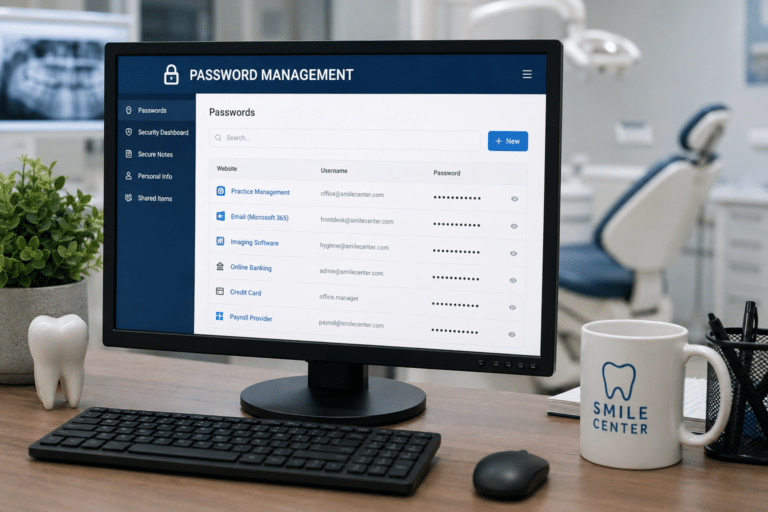
- Sharing usernames and passwords
- Reusing weak passwords across systems
- Leaving computers unlocked in operatories
- Clicking links to “verify” accounts without confirmation
- Accessing practice systems on personal devices or public Wi‑Fi
These actions aren’t malicious — they’re practical shortcuts. But in dental IT security, small shortcuts can lead to major consequences, including downtime, data loss, and HIPAA compliance violations.
Why Technology Alone Can’t Protect Your Practice
Firewalls, antivirus software, encrypted backups, and secure servers are essential — but technology alone cannot prevent human error.
That’s why the most effective cybersecurity strategies focus on education, process, and accountability. When staff understand why a behavior is risky, they are far more likely to slow down, question suspicious activity, and report concerns early. Ongoing cybersecurity training tailored specifically to dental workflows helps teams recognize real-world threats — not just theoretical ones.
This is where specialized dental IT providers, such as Digital Technology Partners, stand out. Instead of applying generic IT solutions, they help dental practices build protection strategies that align with how offices actually operate.
Creating a Culture of Accountability (Not Blame)
One of the most overlooked aspects of cybersecurity is culture. Staff must feel safe reporting mistakes or suspicious activity without fear of punishment. Early reporting can drastically reduce damage. A clicked phishing link reported within minutes may result in no harm at all. The same click ignored for hours or days can lead to ransomware, breached patient data, and costly recovery efforts. Leadership sets the tone. When doctors and managers model good security habits — using strong passwords, locking computers, verifying requests — the rest of the team follows.
The Value of a Dental IT Partner
Dental practices don’t need more fear — they need guidance. The right dental IT partner helps practices protect both technology and people by implementing layered security strategies, including:
- Staff cybersecurity awareness training
- Role‑based user access controls
- Email filtering and phishing protection
- Secure backups and disaster recovery planning
- Clear, simple security policies
Digital Technology Partners works with dental practices to strengthen security without slowing them down — helping teams stay protected, compliant, and confident.
Ready to Strengthen Your Dental Practice’s Security?
If you’re not sure where your practice’s vulnerabilities lie — or if you want a second opinion on your current dental IT setup — now is the perfect time to take action.
Book a no‑pressure discovery call with Digital Technology Partners to review your current technology, identify risks, and build a clear plan to protect your practice.